
Technique, alignment and benefits
Back in 2022, I wrote about the metaphysical and intuitive significance of “bridge” and the posture in yoga. This article explores the multifaceted benefits of integrating bridge pose into both Mat Pilates and yoga practices. Understand the nuances of this posture in both disciplines and learn how it can help build core strength, spinal stability, flexibility, and overall mind-body connection. Whether in a Pilates or yoga setting, this article provides a comprehensive approach to how bridge pose can improve your physical wellbeing and mental equilibrium.
What’s the difference?
There are some differences in how bridge is performed and what benefits it offers in yoga and Pilates. Here is a brief summary of the main differences.

If you want to learn more about the differences between bridge pose in Pilates and yoga, you can check out the references at the end of this article.
Bridge pose in Mat Pilates
In Pilates, bridge pose is known for its effectiveness in strengthening the core, stabilising the spine and improving overall flexibility. Almost every session in our Pilates series incorporates the wonderful bridge! Bridge pose in Pilates is similar to its counterpart in yoga, offering a variety of physical and mental benefits. To perform bridge pose in Pilates:
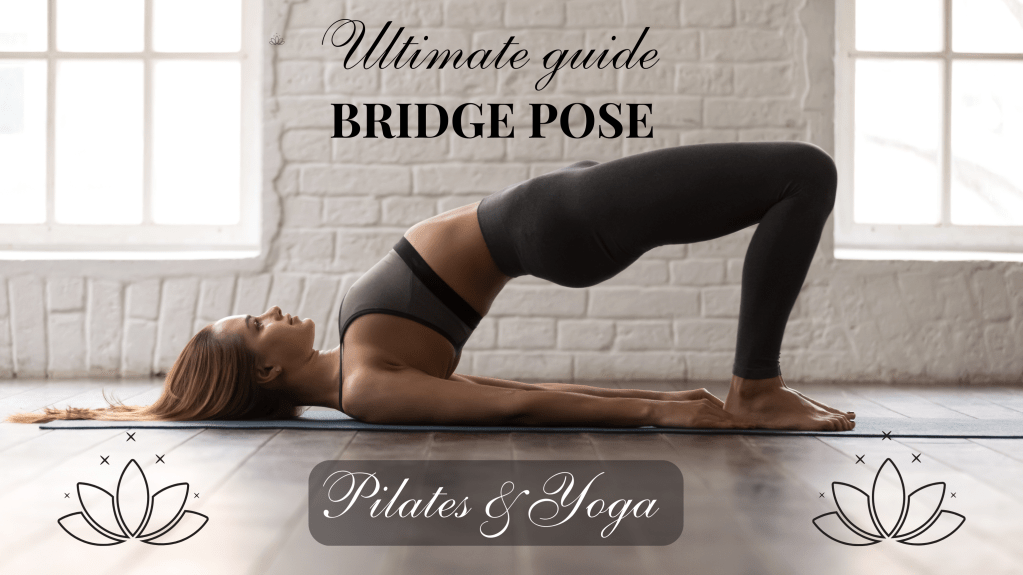
- Starting position: Lie on your back with your knees bent and feet flat on the floor, hip-width apart. Place your arms alongside your body with the palms facing down or take the arms away from the body at about 45 degrees and turn the palms upward to increase the challenge and keep an open chest.
- Alignment and muscular engagement: Inhale to prepare, and as you exhale, engage your glutes, pull in and up on the pelvic floor, and lift your tailbone, lower and middle back off the mat, so that your body weight rests on your feet, shoulders, neck and head. You can either articulate the spine bone by bone, or you can lift as a unit in a more dynamic way. Your body will form a straight line from your knees to your shoulders. Press through the heels to connect with your hamstrings. Press through the big toes to connect with the inner line of the leg and to assist with keeping the knees aligned with the hips. Keep your neck and shoulders relaxed while maintaining engagement of your glute and core muscles.
- Release: To release the pose, either lower your spine back down onto the mat, one vertebra at a time, or release the spine as one unit and hover above the mat before dynamically repeating the lift and lowering action.
Mat Pilates equipment for bridge pose
There are many ways to progress bridge pose in Mat Pilates. An excellent option is to use a booty band, mini ball band, long resistance band or magic circle. These videos include variations of bridge with props:
- Magic Circle Pilates (chapters at 8:18 & 10:14)
- Mini Ball Pilates (starting at 8:50)
- Full Body Pilates – booty band (starting at 7:14)

Benefits of bridge in Mat Pilates
- Core strengthening: Bridge pose in Pilates targets the deep core muscles, including the transverse abdominis and pelvic floor, which helps to improve core strength and stability.
- Spinal stability: By engaging the intrinsic muscles of the spine, bridge pose supports spinal stability, contributing to better posture and reduced risk of injury.
- Hip and glute activation: This pose effectively activates the glutes and hip muscles, promoting better hip stability, strength and stabilisation.
- Enhanced flexibility: Performing bridge pose regularly in Pilates can lead to increased flexibility in the spine and hip flexors, aiding in overall body flexibility.
- Mind-body connection: Similar to yoga, Pilates emphasises a mind-body connection, and bridge pose allows practitioners to focus on breath control and body awareness.
Incorporating bridge pose into your Pilates routine can contribute to improved core strength, flexibility and overall postural stability, making it a valuable addition to a comprehensive Pilates practice.
How to do bridge pose in yoga

Bridge pose, or Setu Bandha Sarvangasana in Sanskrit, is a rejuvenating yoga posture that offers many physical and mental benefits. To perform bridge pose, check out the 2024 video, revisit the images in my previous post and follow these steps:
- Starting position: Lie on your back with your knees bent and feet flat on the floor, hip-width apart. Let your arms rest alongside your body with palms facing down.
- Alignment and form: As you exhale, press your feet into the floor and peel your spine off the mat, vertebra by vertebra, starting from the tailbone, to lift your hips towards the ceiling. Keep your thighs parallel to each other. Relax and lengthen through the neck, with the shoulders away from the ears. Broaden through the collarbones to feel an open chest and breathe evenly. Focus on pressing through the heels to engage the glutes* and hamstrings, press through the big toes to engage the inner line of the leg, and tuck the pelvis slightly to feel an opening through the front of the hips. *Some yoga teachers advise against squeezing the glutes too hard, as this can create tension in the lower back and hamper the flow of energy. They suggest finding a balance between engaging the glutes and relaxing them, so that you can still feel a gentle stretch in the front of the hips.
- Hand position: Optionally, interlace your fingers on the mat, with the arms straight, and roll your shoulders underneath you so the shoulder blades are close together and the shoulders away from the ears.
- Hold and breathe: Hold the pose for around five deep, even breaths. Keep your gaze upward or keep the eyes closed and avoid turning your head from side to side.
- Release: To release the pose, gently unclasp your hands and slowly roll your spine back down onto the mat, vertebra by vertebra.
How to modify bridge pose in yoga
- Raise the hips and place a block, small bolster or firm cushion underneath the lower back, then relax in a supported bridge. An option is to extend the legs and gently engage the abdominals to achieve a relaxed hip flexor stretch, being mindful of not overarching the spine.
- It might be helpful to place a blanket underneath the shoulders and/or neck to avoid stress to the neck and upper spine.
- Hands can be placed around the ankles for a supported sensation or position the hands to support the sacrum and initiate additional lift.
- You could also place a block between the knees to practise alignment.
How to progress bridge pose in yoga
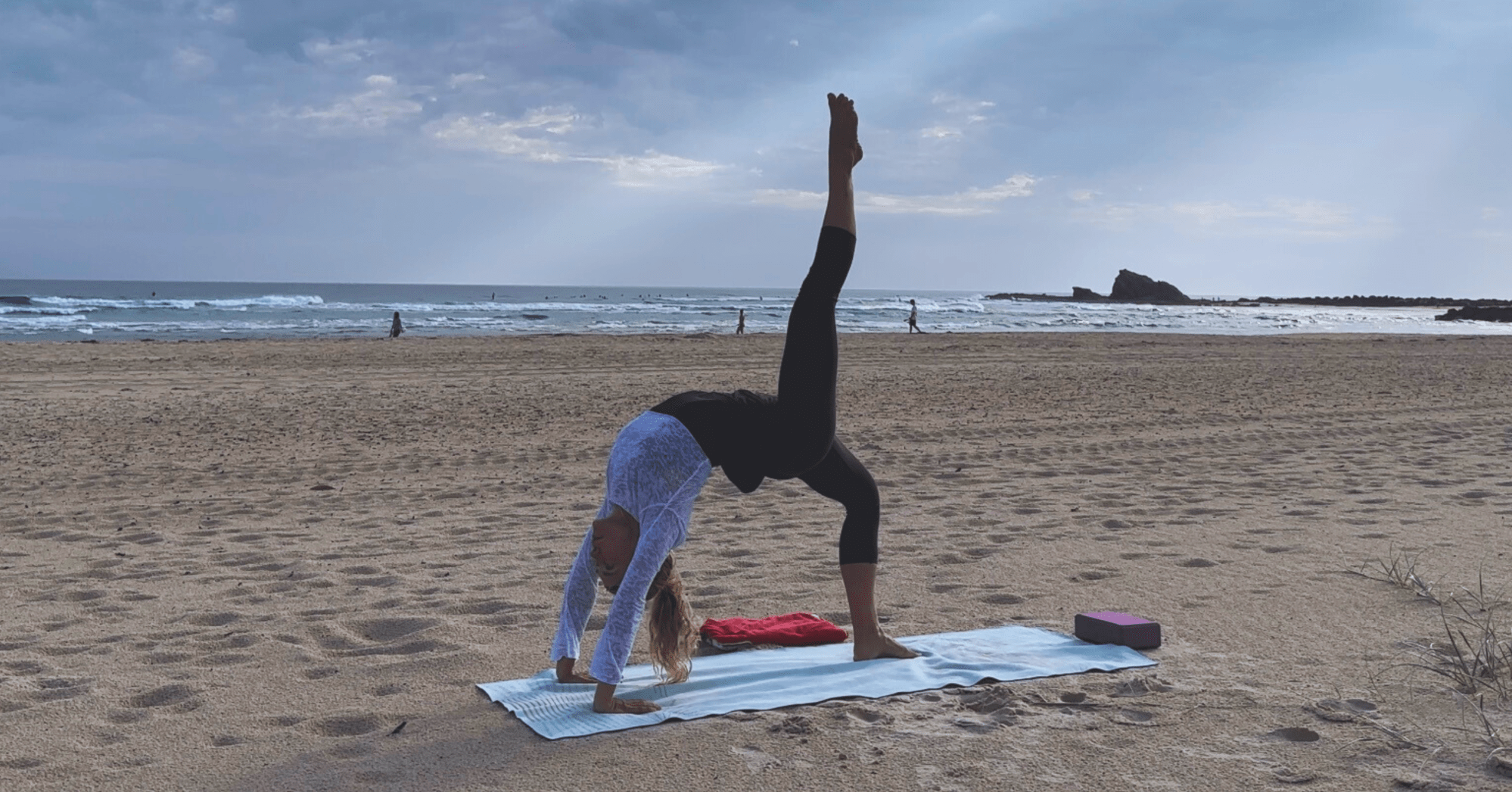
- Once in bridge, raise one leg to the sky, with the knee bent or leg straight, keeping the hips aligned (remember to repeat this for the same duration on the other leg).
- Raise both arms straight up to the sky, with the option to move the arms out to the sides and back up to challenge stability and control.
- Progress to full wheel or upward bow pose. Bring the fingertips toward the shoulders. Then using the strength of the shoulders and arms, lift very lightly onto the crown of the head. Then press the upper body between the arms as we extend the arms and legs, lifting the hips toward the sky, and tucking the tailbone under ever so slightly so that we have a subtle lengthening of the lower back even as we extend the spine. To come out of the posture, flex the elbows, very lightly touch the crown of the mat to the head, tuck the chin, and slowly lower the back of the head, neck, shoulders, upper, middle and lower back toward the mat.
- To advance this further, try extending one leg at a time up to the sky from upward bow, or – only under supervision and support from an experienced teacher – bend over backward from a standing position, first practising with your back to a wall, reaching overhead toward the wall.
Benefits of bridge pose in yoga
- Strengthens the back body: Bridge pose strengthens the back, gluteal muscles and hamstrings, helping to improve overall body strength and posture.
- Stimulates the thyroid: By pressing the throat against the chin, bridge pose helps to stimulate the thyroid gland, which can be beneficial for metabolism regulation.
- Relieves stress and mild depression: The gentle inversion of Bridge pose can help to calm the mind and alleviate symptoms of stress and mild depression.
- Stretches the chest, neck and spine: Bridge pose effectively stretches and opens the chest, back of the neck and spine, promoting flexibility and relieving tension in these areas.
- Therapeutic for Asthma: This pose can help to relieve symptoms of asthma by expanding the chest and improving breathing capacity.
Incorporating bridge pose into your regular yoga practice can offer several physical and mental benefits, making it a valuable addition to any routine.
See you on the mat!
Resources
Here are some books and articles I found valuable:
- Long, R., Anatomy for Backbends and Twists, Bandha Yoga Publications, 2008
- Various articles by Keller, D., via www.doyoga.com
- 7 Ways to Vary Your Bridge Pose – Yoga Journal
- Confused About Whether to Squeeze Your Glutes in Backbends?

 Ascension Active
👌 Nice info
LikeLike